In 2018, the Indian ascetic G.D. Agrawal died on the 111th day of a hunger strike protesting the continued pollution of the Ganges River. Mr. Agrawal had subsisted for over one hundred days on only honey, lemon, and water, and in his final week of life he gave up all sustenance, including water. Although hunger strikes are a common part of public life in India, deaths are relatively rare, a fact that illustrates G. D. Agrawal’s intense commitment to his goal.
Mr. Agrawal certainly had a point. The Ganges is one of the most polluted rivers in the world, and this has direct negative impacts on the health and safety of the millions of Indians who depend on the river. The water is filled with dangerous bacteria that kill thousands of Indians a year, and water-borne diseases in the Ganges river-basin cost Indian families an estimated $4 billion a year. Even worse, the bacteria are becoming resistant to standard anti-biotics. Anti-microbial resistance, as this phenomenon is known, has been called a slow-motion pandemic, with the potential to cause 10 million deaths by 2050. The next global health disaster could be evolving in the polluted Ganges right now.
No doubt, there are important secular reasons to clean the Ganges, but were public health concerns the real – or only – motive for G. D. Agrawal’s hunger strike? Starvation is a brutal way to go. When someone goes on a hunger strike, they begin to feel physical and mental impairment after two to three days as the body switches to using its fat reserves. After two to four weeks, symptoms include dizziness, weakness, loss of coordination, and vision loss. Beyond a month, the severe effects of starvation begin, including difficulty swallowing, vertigo, hearing loss, depression, apathy, and eventually, catastrophic organ failure. G. D. Agrawal reached this final phase and remained there for 8 weeks before his heart stopped beating.
Either G. D. Agrawal is the paragon of the cost-benefit analysis, or he was motivated by something deeper.
Sanctity of the Ganges
Of course, the Ganges isn’t any old river; it’s one of the most sacred bodies of water in the world. The entire river is worshipped by Hindus, and it is not an exaggeration to say that the river is believed to be the personification of a god. Hindus bathe in the river to absolve themselves of their sins, and many Indians’ last wish is to have their ashes sprinkled into the river in order to help free their souls from the cycles of reincarnation.
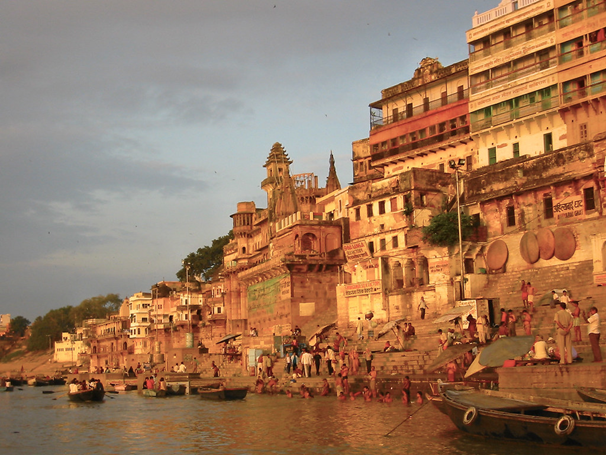
“Sunrise Varanasi, Ganga River” by ironmanixs is licensed under CC BY-NC-SA 2.0
A far more satisfactory explanation of Mr. Agrawal’s hunger strike is that he was protecting the sanctity of the Ganges. As a former member of India’s Central Pollution Control Board, G.D. Agrawal was originally a technocrat, but later in life, his religious beliefs became the primary driver of his activism. At the age of 79, he became a sanyasi – a type of Hindu aesthetic – and he did not hide his frustration with the government’s management of the river: “The purity and piety of ‘Gangajal’ [water of the Ganges] cannot be determined by the government-employed engineers or officials, but it is a subject to be decided by our dharmacharyas [those who live according to the Dharma].” Mr. Agrawal’s solution was to replace government oversight with a board comprised of religious leaders who would make any major decisions related to the health of the Ganges.
Technocratic analysis is highly unlikely to yield such an unusual policy. In fact, Mr. Agrawal’s policy solution represents a rejection of secular analysis, which would have overlooked the intense spiritual importance of the river. Secular analysis, by its very nature, either underestimates or outright ignores “irrational” values. Looking back to moral foundations theory, the best way to understand G. D. Agrawal’s beliefs is through the Sanctity value. The Ganges is sacred, and any human effort to pollute or otherwise negatively influence the river is a violation of this value. It follows that only people who demonstrate a spiritual reverence for the Ganges are qualified to be its protectors.
Impacts
Accounting for the Sanctity value in policy analysis is extremely important, as evidenced by the major impact that G. D. Agrawal’s protests had on India’s energy sector. Before his final hunger strike in 2018, Mr. Agrawal had engaged in four hunger strikes between 2008 and 2012 to protest the construction of hydroelectric dams in the upper reaches of the Ganges, which culminated in a 36-day effort. The government blinked and cancelled several dam projects, including the Loharinag Pala Hydropower Project, which would have provided clean power to tens of thousands of Indians. The cancellation reportedly cost the over $100 million USD, an enormous sum for a country that had a GDP per capita of about $1,500 at the time. Theses cancellations had important effects on the composition of India’s energy sector. Nowadays, India has plenty of untapped hydropower capacity, representing a significant missed economic opportunity. It also has many coal plants, which contribute to climate change and cause millions of deaths per year from preventable illnesses. On a secular cost-benefit analysis, it’s not easy to justify the cancellation of these dams.
I don’t know what type of analysis the Indian public service conducted on these projects, but the government may have fallen into the cost/benefit trap that permeates technocratic analysis everywhere: if the objective, measurable benefits far outweigh the costs, why would the project experience fierce resistance? But resistance to these dams wasn’t rooted in the values that often underpins “rational” analysis. This was an issue of Sanctity, an irrational but completely predictable reaction. Without a systematic exploration of the alternative values, it is easy to underestimate the likelihood of public opposition to what would otherwise be considered a reasonable policy. Simply put, analysis that doesn’t systematically explore the Sactity value cannot account for the extreme nature of the advocacy pursued by G. D. Agrawal’s advocacy or other religious leaders that followed in his wake.
Values are Powerful
In December 2010, police officers confiscated the wheelbarrow of a poor street vendor and demanded a bribe for its return. The vendor did not have the money necessary to pay the bribe, so the officials allegedly slapped the vendor in the face, spat on him, and made a slur against his deceased father. These events illustrate the violation of a wide range of values, including:
- Care (i.e. causing pain is wrong, especially to the vulnerable);
- Fairness (i.e. people should be treated in similar ways and/or people should get what they deserve);
- Authority (i.e. followers should obey legitimate authorities, who should demonstrate effective leadership in turn); and
- Sanctity (i.e. certain actions are inherently dirty and polluting).
With no other recourse, the street vendor stood outside the governor’s office, doused himself in gasoline, and lit a match.
The place was Tunisia, the vendor was Mohamed Bouazizi, and his actions ignited the Arab Spring.
Although no one in government would advocate for the corruption that permeated the Tunisian regime, we simply don’t have tools of policy analysis that can account for a person who willingly lights themselves on fire in protest against corruption (or one who starves himself to death for the benefit of a river). This behaviour cannot be accounted for with the tools of policy analysis we use today. These actions are driven by moral and ethical values, not rationality or self-interest. Public servants are failing to understand a fundamental part of public life. The risks are high; the violation of values can change history.
Values matter, and the public service should think about them.
If you liked this article, please consider signing up for the mailing list on the right side of this page. A new article will be sent every Tuesday at 9:00 AM EST.